“fruit grains” search results (2000)

Introduction to the characteristics of Rwanda coffee beans in Kimmel Manor, a full-grained coffee farm in Rwanda.
The taste of Rwandan coffee is described as a grassy aroma with tropical climates. in addition to the sweetness of fruit, this coffee also gives people a feeling of freshness, clarity, and freshness. Bourbon coffee grown in Rwanda is amazing for its sweet fruit, full-bodied, unrestrained and lingering aftertaste. This kind of coffee is delicious.
2016-07-27 Granules full Rwanda Coffee Manor producing area Mayer Coffee beans characteristics introduction
Boutique Coffee the latest introduction to Yunnan small Coffee
Small-grain coffee is suitable for growing in the mountains at an altitude of 800 to 1800 meters. If the altitude is too high, it will taste sour, and if it is too low, it will taste bitter. Small grains of coffee are mostly planted in dry and hot valleys about 1100 meters above sea level, so they are moderately sour, rich and mellow. There is a unique environment suitable for the growth of small seed coffee in many areas of Yunnan, and the quality of small seed coffee is excellent. The planting area is mainly distributed in the
2015-12-09 Boutique coffee Yunnan small grain latest introduction flavor detailed explanation
Common Flavor and Taste Characteristics--Relationship between Coffee Grain Species and Flavor
Many people blame coffee astringency on baristas or roasters, thinking it is caused by improper extraction or roasting, but in fact there are many reasons for astringency. Let's analyze them one by one! The first is the raw bean part. Differences in astringency caused by variety differences. Roberta beans tend to be more astringent than arabica beans because arabica beans contain only 5.58% chlorogenic acid, while Roberta beans tend to be more astringent than arabica beans.
2016-10-18 Common Flavor Taste Characteristics Coffee Grain Type Relationship Many People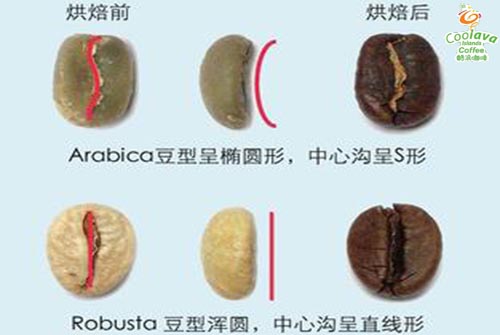
Boutique coffee beans: details of Arabica and the difference between Arabica and Robusta
Arabica Coffee Coffee Arabica many people have seen roasted coffee beans, but unless you have lived or traveled to coffee producing areas, you may not know coffee trees. The saplings are short-trimmed, but when they mature, they are 30 feet tall and covered with waxy leaves that grow symmetrically in dark green. The coffee fruit grows along the branches. After the white flowers are in full bloom and pollinated, the fruit takes a year to ripen.
2015-12-09 Boutique coffee beans rabbi details introduction and its Robes Booth difference
The backbone of coffee trees.
Coffee is a shallow root crop, and the plants propagated with seeds have conical roots. Root system refers to the general name of root. The root morphological distribution and depth of shade varieties / soil conditions and agricultural technical measures are different. From the point of view of varieties, the roots of small / medium grain species are shallower, while those of large grain species are deeper. Under normal circumstances, there is a thick and short taproot and many well-developed lateral roots. Yunnan small-grain coffee has a 4-year-old fruit.
2015-05-15 Coffee planting basics common sense trunk coffee shallow roots crops seeds reproduction
The backbone of the coffee tree
Coffee is a shallow root crop, and the plants propagated with seeds have conical roots. Root system refers to the general name of root. The root morphological distribution and depth of shade varieties / soil conditions and agricultural technical measures are different. From the point of view of varieties, the roots of small / medium grain species are shallower, while those of large grain species are deeper. Under normal circumstances, there is a thick and short taproot and many well-developed lateral roots. Yunnan small-grain coffee has a 4-year-old fruit.
2014-08-07 Coffee trunk coffee shallow roots crops seeds reproduction plants cones roots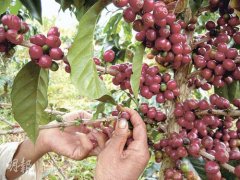
Record of the process of picking coffee beans in Laos
When picking Arabica beans, use your hands to twist them one grain by one. Pick only ripe fruits in bright red, not green (immature) or dark brown (rotten). Generally speaking, coffee trees will bear beans after two or three years of growth and can be picked in four years. Bolaven Cafe comes with clear Americano for breakfast. When picking Arabica beans, use hands to twist them one grain at a time. Choose bright red only
2014-11-13 Coffee knowledge coffee beans Laos picking coffee beans
The basic knowledge of coffee tree planting
Coffee is a shallow root crop, and the plants propagated with seeds have conical roots. Root system refers to the general name of root. The root morphological distribution and depth of shade varieties / soil conditions and agricultural technical measures are different. From the point of view of varieties, the roots of small / medium grain species are shallower, while those of large grain species are deeper. Under normal circumstances, there is a thick and short taproot and many well-developed lateral roots. Yunnan small-grain coffee has a 4-year-old fruit.
2015-03-27 Coffee trunk planting basics common sense coffee shallow roots crops seeds reproduction
Basic knowledge of how to change from grain to cup of coffee
People in Seattle are curious. They want to know where their food comes from. We may know what kind of chicken we eat, or which farm our usual carrots come from, or which beach our oysters for dinner come from. Although Seattle people now prefer locally produced farm and livestock products, the same drink they need every day is another drink from the earth.
2015-09-10 Coffee how one grain one cup basics common sense
Introduction to the characteristics of Yunnan Tieka Coffee Flavor Flavor Manor
Typica and Bourbon, two classic high-quality coffee varieties, are the main coffee varieties in Yunnan. In 1991, Katimo Catimor series varieties were introduced from Kenya (with stronger anti-virus ability and higher yield). A variety of Arabian species (also known as small seed species). Because the morphology and habits of the two varieties are similar, the two varieties are mostly mixed. Iron
2016-09-22 Yunnan pickup coffee flavor manor producing area characteristics boutique coffee beans varieties
Introduction to Papua New Guinea Coffee producing area with plump grains and varied taste
The top coffee beans in Papua New Guinea are as beautiful and precious as the country's national bird of paradise. As coffee in the country is widely grown in the highlands of 1300 to 1800 meters above sea level, coffee beans are plump and varied in taste, with pleasant acidity and fruit-like sweetness. In Papua New Guinea, about 75% of coffee products come from small local farmers.
2016-06-21 Granule plump taste variety Papua New Guinea coffee producing area introduction
Boutique Coffee basic knowledge the backbone of coffee trees
Coffee is a shallow root crop, and the plants propagated with seeds have conical roots. Root system refers to the general name of root. The root morphological distribution and depth of shade varieties / soil conditions and agricultural technical measures are different. From the point of view of varieties, the roots of small / medium grain species are shallower, while those of large grain species are deeper. Under normal circumstances, there is a thick and short taproot and many well-developed lateral roots. Yunnan small-grain coffee has a 4-year-old fruit.
2014-12-19 Boutique coffee basics common sense trunk shallow roots crops seeds reproduction
What is the truth of Yunnan coffee? The difference between Yunnan coffee and Yunnan small seed coffee beans
We often meet boastful people in coffee growing areas in Yunnan: our Yunnan coffee is delicious, our Yunnan coffee has won awards in the world, and our Yunnan coffee is very famous and delicious in the world. I asked them if they had had a drink. Where is it good? I can't answer. Many curry farmers mix 15% to 20% green fruit in red fruit. Can this kind of coffee taste good? This kind of coffee is only roasted.
2016-03-10 Yunnan coffee truth what is it small grains coffee beans differences species
Cultivation techniques of small-grain Coffee in Yunnan Province: disease Control
1. Coffee rust is the main disease of coffee, the most harmful, the damaged plants, light reduced yield, serious death. Coffee rust is mainly harmful to leaves and sometimes to young fruits and twigs. After the leaves were infected, many light yellow spots appeared at first and enlarged in the form of water stains, followed by orange-yellow powdery spores on the back of the leaves, and there was a light green halo around the disease spots, which gradually expanded or connected in the later stage.
2015-10-07 Yunnan Province small grains coffee cultivation techniques diseases control
Description of Flavor of Yunnan small Grain Coffee Iron pickup Coffee introduction to the taste of fine coffee beans in producing areas
Yunnan can be said to be the only province that still grows Arabica on a large scale, mainly in Dehong Lincang, Baoshan, western Yunnan and Pu'er Banna in southern Yunnan. Robusta was the main coffee introduced by missionaries in the 19th century, and then it was no longer planted on a large scale. In the 1950s, experts assisted by the Soviet Union put two mainstream Arabica varieties in the world: typica and Bo.
2016-09-28 Yunnan small grains coffee pickup flavor description varieties producing areas characteristics boutique
Prevention and control of small-grain coffee diseases (coffee rust, coffee anthracnose)
1. Coffee rust is the main disease of coffee, the most harmful, the damaged plants, light reduced yield, serious death. Coffee rust is mainly harmful to leaves and sometimes to young fruits and twigs. After the leaves were infected, many light yellow spots appeared at first and enlarged in the form of water stains, followed by orange-yellow powdery spores on the back of the leaves, and there was a light green halo around the disease spots, which gradually expanded or connected in the later stage.
2014-06-05 Coffee disease coffee rust coffee anthracnose
Introduction of Coffee production regions in Western and Southern Yunnan
Small-grain coffee is suitable for growing in the mountains at an altitude of 800 to 1800 meters. If the altitude is too high, it will taste sour, and if it is too low, it will taste bitter. Small grains of coffee are mostly planted in dry and hot valleys about 1100 meters above sea level, so they are moderately sour, rich and mellow. There is a unique environment suitable for the growth of small seed coffee in many areas of Yunnan, and the quality of small seed coffee is excellent. The planting area is mainly distributed in the
2016-06-16 Yunnan western southern coffee production region introduction small grains suitable
Record the process of picking coffee beans in Laos
When picking Arabica beans, use hands to twist them one grain at a time. Pick only ripe fruits in bright red, not green (immature) or dark brown (rotten). Generally speaking, coffee trees will bear beans after two or three years of growth, and Bolaven Cafe can be picked in four years. Clear Americano is served with breakfast. When picking Arabica beans, use hands to twist them one grain at a time. Choose bright red only
2014-09-01 Coffee knowledge Laos coffee coffee bean picking process
Leaves and flowers of coffee
Coffee leaves opposite, usually two rows spreading, individual single leaf whorl, petiole short, leaf leathery, green (dark green on the upper surface, light green on the lower surface). Glossy oval, oval to long oval. The leaf size of small-grain coffee is relatively uniform, the leaf is small and the end is longer, and the leaf edge wave is obvious, about 12-16 cm long and 5-7 cm wide. The leaves of the medium grain species are long and large, soft and thin.
2014-08-07 Coffee coffee opposite leaves opposite general biseriate spreading individual single leaf whorl
Description of Flavor of Yunnan small-grain Coffee Huaguoshan Coffee; introduction to the taste of varieties in producing areas
After the victory of the Anti-Japanese War, the local party organization of the Communist Party of China in Yunnan comprehensively carried out the struggle to seize political power by organizing and mobilizing the people, and formed the column of the Guangxi-Yunnan-Guizhou Border region of the Chinese people's Liberation Army. In 1949, under the unified leadership of the Party, 61 counties were liberated and 14 base areas were established. On December 9, 1949, Lu Han led his army to revolt in Kunming, and Yunnan proclaimed the peaceful liberation of the May 4th Movement in 1919.
2016-10-14 Yunnan small grains Coffee Huaguoshan Flavor description Grinding characteristics varieties producing areas